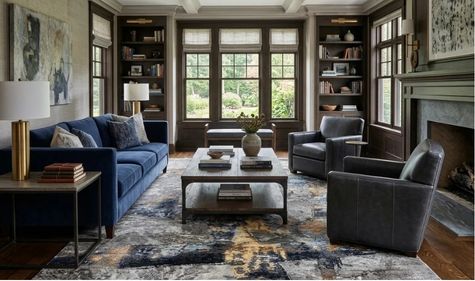
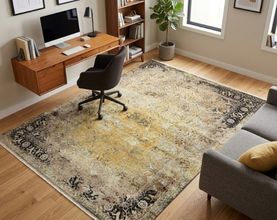
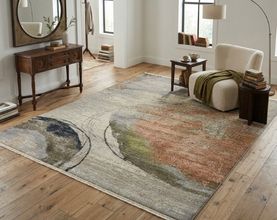
A beautifully styled, high-end American living room featuring a large handmade area rug

Handmade USA Area Rugs

Handmade USA area rugs are hand-knotted, hand-tufted, or hand-woven from natural fibers like wool, cotton, and silk, and they're made with American homes in mind, from 8x10 rugs for living rooms to 9x12 pieces for king-size bedrooms.

They cost more upfront than machine-made rugs, but they last decades longer, hold up better against crushing and stains, and come in modern, traditional, and transitional styles that suit US architecture. Saraswati Global offers standard sizes alongside a fully custom program for designers and hospitality projects.

Handmade Area Rugs for USA Interiors

In contemporary American interior design, an area rug is never just something you put down to cover the floor, it's closer to the structural foundation the rest of the room's aesthetic gets built on. Spacious urban loft in Manhattan, cozy suburban family home somewhere in the Midwest- it doesn't matter; the right handcrafted rug anchors the furniture, defines where one living zone ends and the next begins, and brings in the kind of tactile warmth underfoot that hard flooring just can't offer on its own.

At Saraswati Global, our luxury area rugs bring together centuries-old weaving traditions and a modern American design sensibility. Made with quality natural fibers by artisans at the very peak, you will get the durability, texture, and stain-resistant properties required of a busy home.

Handmade and factory-made rugs are really two completely different things. A rug made by machine is fast and cheap - its appeal is visible: its pile is thinner, backing is synthetic, and it looks flat up close. A handmade rug can take anywhere from a few weeks up to months and even longer for more complex hand-knotted designs. The time shows up itself later in durability, color depth, and a texture that improves rather than wears down.

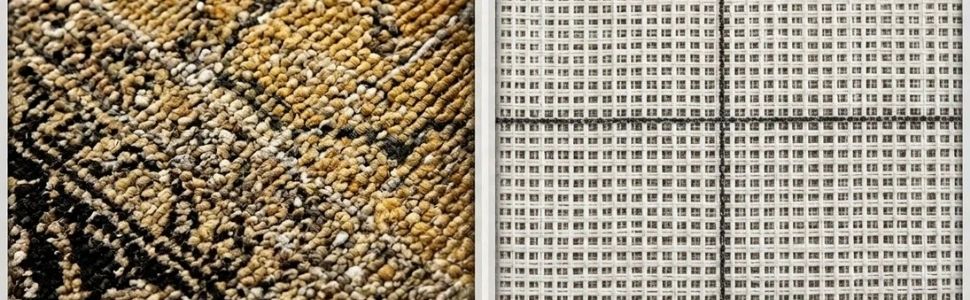
Close-up / Texture Image - Detailed shot showing the intricate texture and weave of a handmade rug vs. synthetic backing

Choose the Right Area Rug Size

Getting the proportions right is pretty much make-or-break for how a room feels — too small and the space reads as fragmented, too big and it can feel cramped against the architecture. Standard US living and dining spaces need fairly precise sizing to strike that balance, and this is probably the single most common question we get from first-time rug buyers: what size rug for a living room is the right one?

8x10 area rugs are the most versatile call for medium living rooms and master bedrooms — big enough to fit all the front legs of your living room seating, or anchor a queen bed with a comfortable perimeter around it. If you're only ever going to own one rug, this is usually the size that gets recommended, simply because it works in more rooms than any other dimension.

9x12 area rugs are built for spacious living rooms and king suites, the large open-plan spaces where you want to frame a full sofa layout or a king bed with nightstands. These read as genuinely grand once they're down, which is part of why they're the default choice for larger new-construction homes.

6x9 area rugs work well in compact living rooms, apartments, home offices — enough to frame a standard 2–3 seater sofa or sit comfortably beneath an executive desk. A lot of city apartments and smaller condos end up here, where a 9x12 would simply eat too much floor.

5x7 and 4x6 area rugs are more about defining smaller accent zones — entry foyers, bedside landings — without overwhelming the room. These also tend to be the easiest entry point for someone buying a handmade rug for the first time, since the investment is smaller while the craftsmanship is identical.

For anything outside those standard dimensions, custom sizes are tailored to unique floor plans, grand architectural spaces, luxury commercial or hospitality projects — stairwells, curved landings, oddly proportioned great rooms, the kind of spaces where an off-the-shelf rug just won't sit right no matter how you angle it.

Area Rugs for Living Rooms

The living room is really the center of American home life, so living room area rugs have to do double duty — stand up to daily foot traffic while still pulling the whole room together visually.

The usual question is how big should a living room rug be, and the rule of thumb is simple: at least the front legs of every main seating piece should rest on it. Design professionals generally land on one of two layout approaches here, and which one makes sense usually comes down to the shape and openness of the room itself.

All legs on

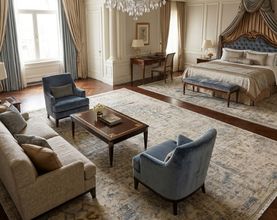
Means placing every major seat piece fully over a well-sized rug (usually 9x12 or custom), giving you a big, cohesive footprint — works best in an open-concept floor plan where the rug is conducting real visual separation work between the living room rug area and an adjacent kitchen or dining area.

Front legs on only

Where just the front legs of sofas and accent chairs sit on an 8x10 area rug. It anchors the conversation area while allowing for hardwood or tile around the perimeter, which many homeowners like too because it still allows some of that natural flooring to show and feels a little less heavy in smaller spaces.

Either approach works, honestly — it's less about one being objectively correct and more about matching the rug to how open or enclosed the room already feels.

Area Rugs for Bedrooms

Mostly comfort, acoustic softness, and a touch of visual warmth for bedroom design. And bedroom area rugs give you that welcoming landing when you get out of bed in the morning — a small detail, but a totally different atmosphere than your feet hitting cold hard floors.

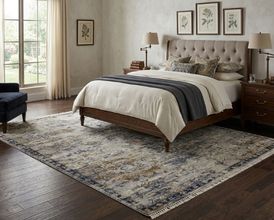
For queen beds, an 8x10 area rug that is parallel to the bed frame provides both side coverage and foot room for the bed plus enough placement on either side of nightstands.

For king beds, step up to a 9x12 area rug, which keeps things proportionally balanced and extends at least 24 to 36 inches around the sides so the whole layout feels symmetrical rather than off. Going smaller here tends to look like an afterthought — like the rug size for a full-size bed and never updated.

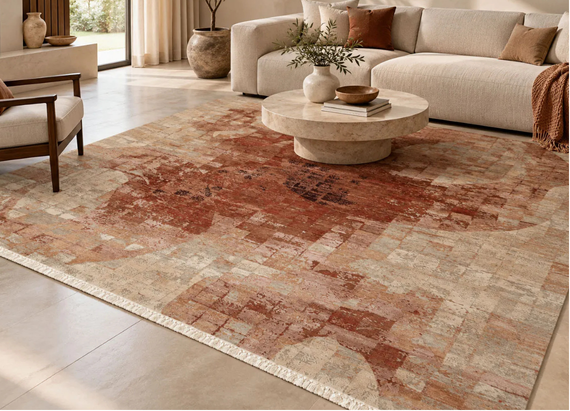
Side-by-Side Visual / Split Banner - Image showcasing a Living Room Rug Layout
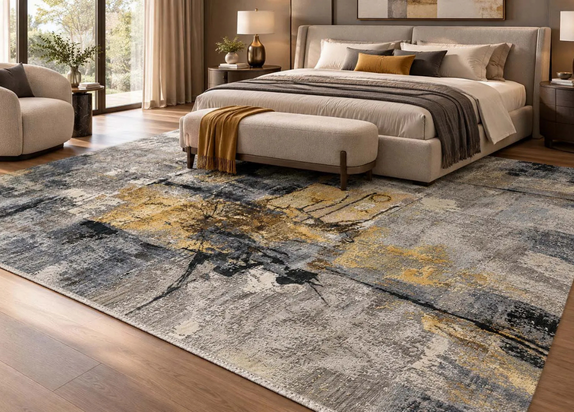
Side-by-Side Visual / Split Banner - Image showcasing a Bedroom Rug Layout

Wool & Natural-Fiber Area Rugs

Material choice is really what drives longevity, feel, and how much upkeep a rug actually needs down the line. Premium wool area rugs remain the gold standard for American homeowners, and the wool rug benefits come down to real structural reasons, not just tradition for tradition's sake.

Wool fiber carries natural lanolin oils, which gives it a built-in stain resistance that helps repel spills and everyday soil before they set in, you get a real window to blot something up before it becomes a permanent mark.

That same fiber has a natural spring-like coil, which means real crush resilience; it bounces back under heavy furniture legs and constant foot traffic instead of staying flattened the way a lot of synthetic pile does after just a season or two.

And do rugs help with heat? With wool, they do. On top of the acoustic comfort, wool adds real thermal insulation against cold subfloors, plus a noticeable dampening effect on room echo, something that matters more than people expect in homes with a lot of hardwood or tile.

For a little more textural range and some subtle sheen, our collections also bring in natural silk, bamboo viscose, and organic cotton blends — each one layered into a wool base so you get the shine or softness without giving up the structural backbone that wool provides.

Modern, Traditional & Transitional Area Rugs

American interior design pulls from a genuinely wide range of aesthetics, so matching your rug style to your home's architecture matters more than people sometimes think — the wrong style can fight a room even when the size and color are both technically right.

Modern Area Rugs

Modern area rugs lean into clean geometric patterns, abstract color fields, minimal motifs — a natural fit for contemporary apartments, mid-century modern homes, anything minimalism-leaning where you want the rug to feel intentional rather than decorative filler.

Traditional Area Rugs

Traditional area rugs carry intricate heritage motifs, classic medallions, richer color palettes — these suit traditional and colonial architecture especially well, and they tend to be the pieces that age into genuine heirlooms.

Transitional Style Rugs

Transitional style rugs sit in between, blending classic heritage patterns with a more updated, muted palette. Genuinely the easiest bridge between older architecture and newer furnishings, which is probably why it's become the most requested style category for renovated older homes.

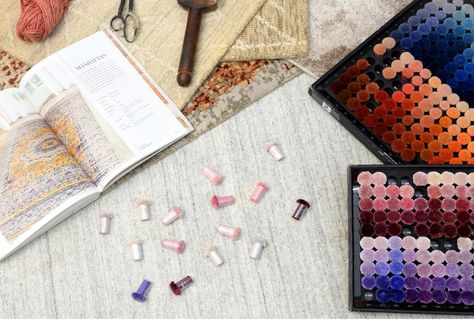
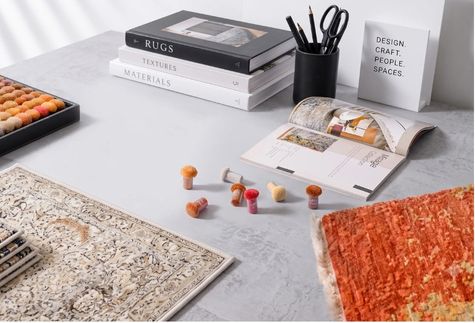
Interior designer working with a client or artisan — table spread with custom color tufts (yarn pom-poms), color pom swatches, custom rug rendering blueprints, and sample rug strike-offs.

Construction Techniques Behind Our Handcrafted Rugs

How a rug is built matters just as much as what it's made from, because the construction method determines pile height, texture, and how well the piece holds up through decades of daily use.

Hand-knotted rugs are the most labor-intensive and the longest-lasting. Every knot is tied by hand on a vertical loom, with no synthetic backing or adhesive anywhere in the build. These are multi-generational pieces, the kind that get passed down rather than replaced.

Hand-tufted rugs are made with a handheld tufting gun that punches yarn loops into a canvas backing, which is then sealed with a secondary fabric layer. They're quicker to produce than hand-knotted rugs but still entirely handmade, which makes them a strong middle ground on both price and pile density.

Hand-woven rugs and flat-weave rugs skip the raised pile altogether. The warp and weft threads are interlocked directly on a handloom, so the rugs come out reversible, lightweight, and low-profile. They're a good fit for layered looks, or for spaces where a thick pile would feel like too much.

If you're weighing hand-knotted vs hand-tufted, the short version is that hand-knotted rugs win on lifespan and fine detail, while hand-tufted rugs win on price and pile density.

Custom Area Rugs for USA Projects

Not every floor plan fits standard sizing, and that is exactly why a full bespoke program at Saraswati Global is in high demand for US interior designers, architects, or hospitality buyers who have custom-size needs, a specific color palette desired, or a preferred fiber blend.

Be it a scaled pattern for a luxury penthouse or specifying a heavy-duty wool composition for an upscale boutique hotel, our custom weaving capabilities mean your specifications are delivered exactly as needed without sacrificing the craft. Our collaboration is direct with the design teams on color matching, pile heights, and even custom motifs inspired by a client's own brand or architectural details.

Custom Area Rugs for USA Projects - Artisan at work or bespoke luxury interior project

Explore Our Collections

USA Area Rugs Main Collection - CLICKABLE IMAGES

Navigate our primary rug categories to find the right fit for your project or contact us for more details -

Frequently Asked Questions

Hand-knotted rugs are tied entirely by hand on a vertical loom without any glue or synthetic backing, making them heirloom pieces meant to last for generations. Hand-tufted rugs use a handheld tool to punch yarn into a canvas backing; they are quicker to make, offering a nice balance of good pile density and a lower price point.

Yes. Saraswati Global offers a full custom program for unique floor plans, custom colorways, specific fiber blends, or tricky spaces like stairwells and grand rooms.

Handmade area rugs offer distinctive textures, intricate craftsmanship, and long-lasting durability. Depending on the construction and materials, they can also provide better resilience against furniture pressure and everyday wear. They cost more than machine-made rugs but their craftsmanship and long durability can make them the best investment.

Wool is a popular choice for area rugs because of its natural resilience, softness, and resistance to everyday soil. Cotton offers a different natural texture, while silk and bamboo viscose can add a subtle sheen and a luxurious finish. The best material depends on your preferred look, comfort, durability requirements, and maintenance needs.