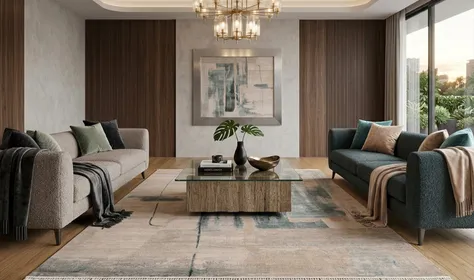
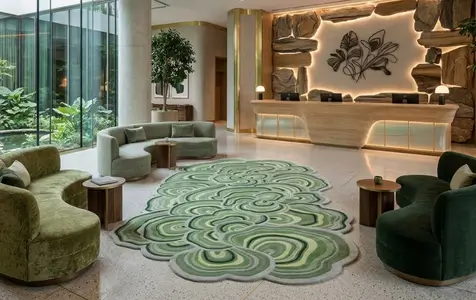
IMAGE 1 – Hero Section: High-end American interior featuring a handcrafted artisan rug

USA Handmade Rugs: Artisan-Made Pieces from Saraswati Global

A hand made rug is one that people build, not production lines. Someone knots it, tufts it or weaves it by hand, one piece at a time.

We have been making them in India since 1978, and our USA handmade rugs range covers every major hand technique, from hand-knotted heirlooms to light flat-weaves. This page walks through how each type is made, which fibers suit which rooms, and how designers use custom work in American homes.

Handmade Rugs Crafted by Skilled Artisans

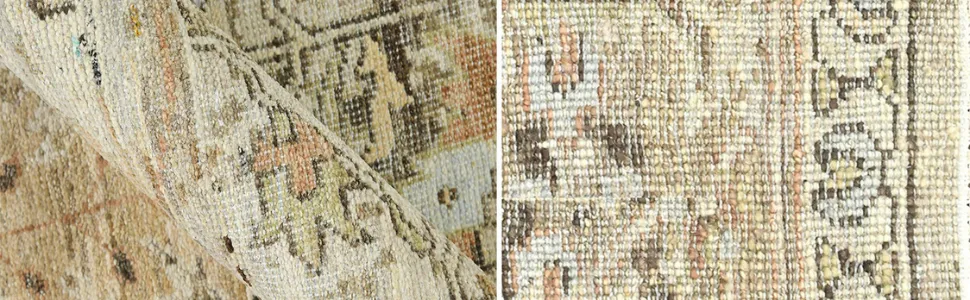
Flip any of our handmade rugs over, and you can see how it was built. The knots sit in tidy rows. The loops are packed evenly. No two edges match perfectly. That is what artisan rugs look like up close: small human wobbles inside a very disciplined structure.

Our artisans spend years learning the work. We draw a pattern, dye the yarn to match, and a weaver turns it into pile, setting the tension of every row by hand. This is why handmade area rugs hold their shape and color long after a machine-made rug has started to go flat.

Everything we make starts from this same hand process, whether it is a quiet neutral or one of our bolder designer handmade rugs. What changes is the method. The method decides how a rug feels, how long it lasts, and what it costs. Knotted rugs are dense and detailed. Tufted rugs are plush and softer. Woven and flat-weave rugs are flexible and low-profile. The sections below take them one at a time.

IMAGE 2 – Close-up of rug back showing knots, beside the front of the same rug

Hand-Knotted Rugs

Hand-knotted rugs are the most labor-intensive and durable rugs. The weaver knits each knot around the warp yarns, row by row, after which he or she cuts off the top of the pile to even it out. A large piece can take a few months. No glue or staples are used to hold anything together; the rug is just itself.

The closeness of the knot determines the sharpness of the pattern. Crisp curves, florals, and medallions have fine, tight knotting, but looser knotting is better for bolder geometrics. People who are interested in getting a hand-knotted rug to use for years and years and years can find them here. It is also the kind of rug people are sure to keep and pass down. Have a look at our hand-knotted rugs.

Hand-Tufted Rugs

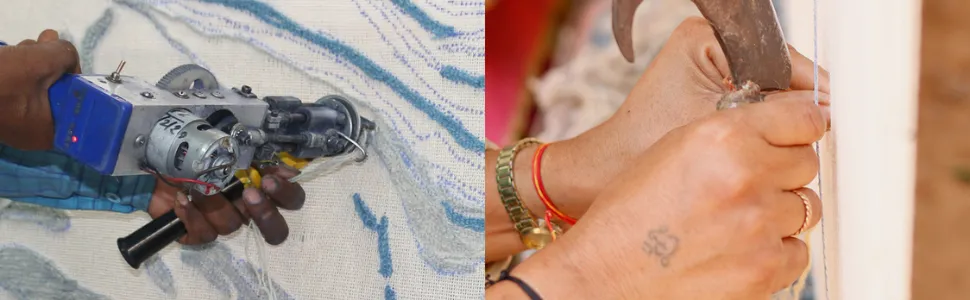
Ever wonder what does hand tufted mean? This is the black and white version. A person using the tufting gun presses it into a stretched fabric, and the tufting gun shoots tufts of yarn into the fabric. The loops may remain uncut for the texture or be cut for a smooth pile. On the back, there is another layer of cloth to secure the contents.

Hand tufted rugs are less expensive and often quicker to manufacture than hand knotted rugs. They like designers because their edges can be carved, the height of their piles can be mixed, and they can employ large blocks of solid color. The handle is not as firm and thin as a knotted rug. The compromise is longevity: A tufted rug will not last as long as a knotted rug in an active hallway, but it will perform admirably in bedrooms and living rooms. Browse our hand-tufted rugs.

IMAGE 3 & 4 – Artisan operating a tufting gun / tying knots on a loom

Hand-Woven Rugs

Hand-woven rugs are produced in much the same way as cloth, with threads running over and under a series of warp threads on a loom. No knots; flatter and more flexible. Our hand woven rugs rest perfectly under the dining chairs, down the hallways, and anywhere there's too much space for a thin "rug". The leanest is a flat-weave. No raised pile at all and sometimes even reversible.

Flat-weave rugs are lightweight enough to roll up and can easily add to larger rugs. That's where the hand-loomed vs. hand-knotted question typically originates, as hand-loomed rugs are in the same family. To sum up, Hand-loomed rugs are constructed on a loom without using any knots, and hand-knotted rugs are tied, knot by knot. The first is lighter and quicker to make. The second is heavier and stronger.

Handmade Wool Rugs

Most of our handmade wool rugs start with wool, and the reasons are practical. The fiber is springy, so the pile bounces back after furniture and footsteps. It resists soil well and takes dye deeply, so color does not look flat. Wool handmade rugs also age kindly. A few years of use softens the surface instead of wearing it out.

Wool holds warmth, too. That is why insulated area rugs are so often wool: the dense pile traps air and takes the chill off hardwood, tile and stone. If winters get cold where you live, a thick wool piece makes one of the better winter rugs for living room seating areas, especially over a cold subfloor.

Pets need a bit more thought. Among the best rugs for pet owners are cut-pile wool designs in a mid-tone pattern. They hide hair and small marks, and there are no loops for claws to catch. If you would rather have something easier to wipe down, we also make rugs from recycled PET yarn. Our wool rugs range covers all of this, including wool blended with silk or viscose when you want a little sheen.

Care is simple. Vacuum on a suction-only setting, blot spills instead of rubbing them, and turn the rug every six months or so, so sun and foot traffic wear it evenly.

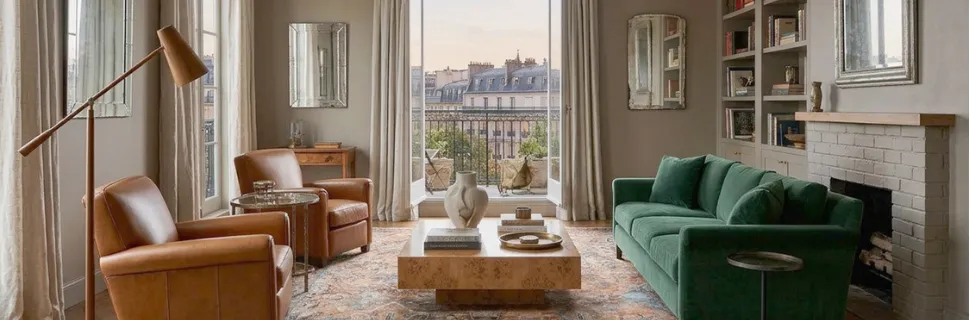
IMAGE 5 – Wide lifestyle shot: layered rugs in a living room

Handmade Rugs for Living Rooms & Bedrooms

If you're decorating a living room, begin with the furniture and then choose a rug to complete the look.

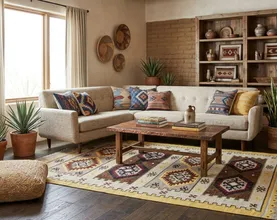
Keep at least half of the sofa and chairs on it so the room will appear as a unit. When it comes to rugs for living room ideas, there are three different types that work best: a traditional hand-knotted rug under a plain linen sofa, a tufted geometric rug in an open planar design, or a soft neutral wool rug which allows artwork and furniture to speak for themselves.

How to Layer Rugs Like a Pro

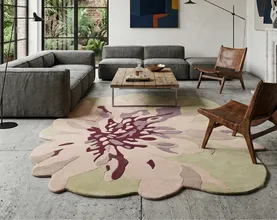
The more layers, the better – layering adds depth. Are you interested at how to layer rugs like a pro? Use a flat-weave or natural fibre rug as a foundation. Place a smaller, more substantial handcrafted rug on it, at a slight angle, so that the base is visible on all sides.

Make one of the two quiet and ensure they're not too tall so that the top rug doesn't move easily or anyone trips on an edge.

Floors Matter & Bedrooms

Floors matter too. A rug in cooler shades of blues or greys will not make a room one-note on top of warm-toned hardwood flooring. Underneath pale oak or tile, deeper hues provide a floor to kick against. Not sure? Take a sample up to the light of the room in the real light as early as the morning and as late as evening before you make your decision.

Bedrooms are different. Look for softness more than pattern; thus a hand-tufted wool rug is a natural choice. Run it out on both sides under the bed, and your feet will be on pile—not cold floor first thing in the morning.

Handmade Rugs for Interior Designers

With a project that requires a certain palette, an odd room configuration, or a pattern from the client's existing space, designers turn to us. Our bespoke rug service will allow you to collaborate with our rugs team on the size, color, pile height, and fiber of your rug before it goes onto the loom.

The Trade Program is designed for designers, architects and hospitality buyers who place repeated orders. If you are a hotel, restaurant or office, give us the details about foot traffic at an early stage so we can recommend the most appropriate fiber and construction. For an office lobby versus a guest room, a rug isn't the same.

IMAGE 6 – Custom or hospitality project, e.g. a bespoke rug in a hotel lobby or showroom

Explore Our Handmade Rug Collections

Pick a construction method to start, or browse by fiber.

Questions about sizes, shipping to the US or a custom order? Contact our team.

FAQs: Handmade Rugs

Ans: Handmade rugs are made by hand, as opposed to a power loom. Each is knotted, tufted or woven by a craftsperson and can take several days to months. Small variations in the surface are normal.

Ans: Turn it over. The pattern is visible on the back of a hand-knotted rug, while individual knots can be seen. A tufted rug has a cloth backing. Other indicators of handwork are the small deviations from the pattern.

Ans: Hand-knotted wool rugs will outlast many and many years with normal care, and hand-tufted wool rugs will last for generations. The most important steps are to rotate the rug, vacuum without the beater bar, and blot up spills immediately.

Ans: A mid-tone cut-pile wool rug is a good option. Conceals hair and has no loops for claws to get caught in. For easy cleanup, recycled PET rugs are also available.

Ans: Yes. A thick wool rug has a large wool pile that traps air and insulates the floor, making it warmer to stand on than wood, tile, or stone.

Ans: Yes. We can supply bespoke service on size, color, design, and fiber, and the Trade Program is designed for designers and hospitality projects. Share your plans with the team, and they will give you information on options and timelines.