

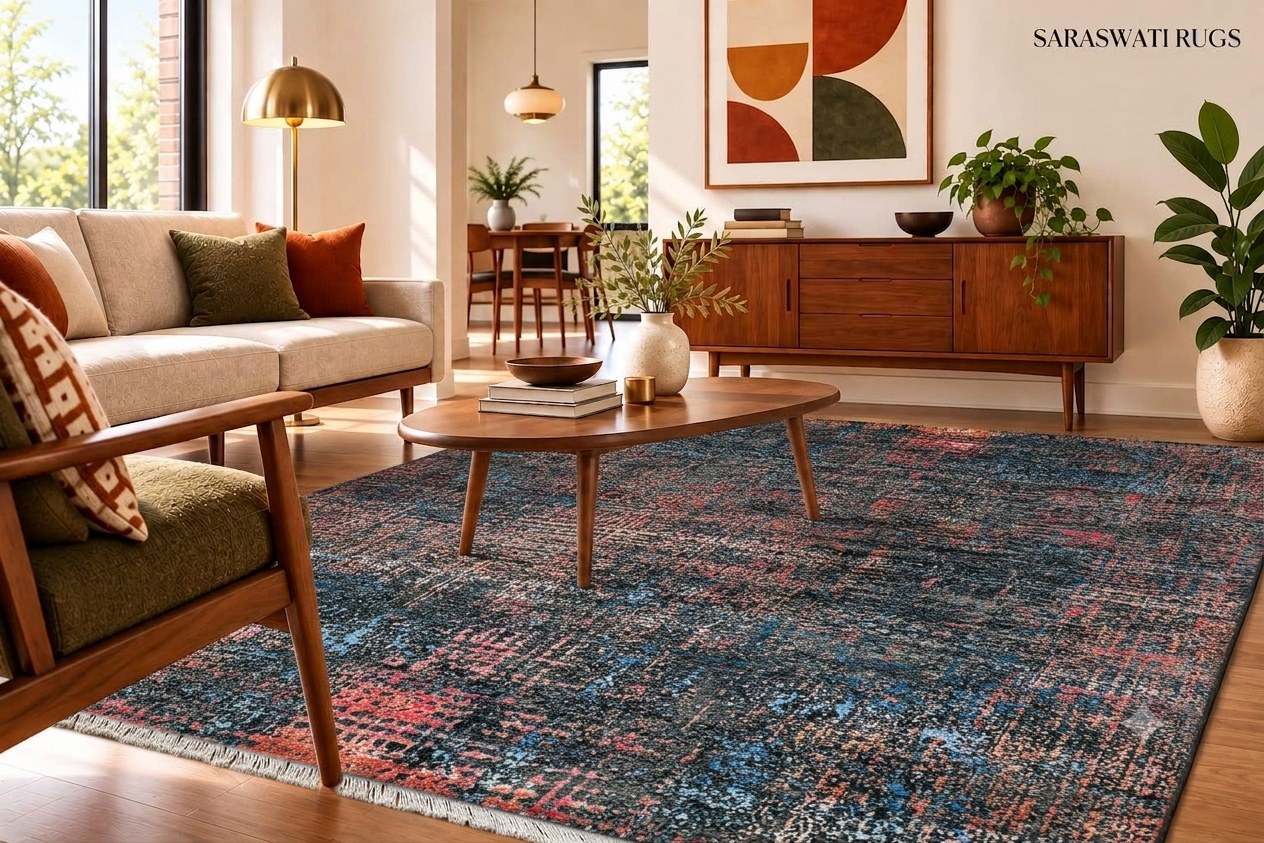
How to Style a Mid-Century Modern Rug with Teak & Walnut Furniture
The mid-century modern design movement emerged around 1940 and remained popular through the 1960s. It grew out of a simple idea. The furniture must have a clean appearance, perform well, and be made of materials that are honest with the consumer, such as solid wood, wool, and leather.
A carpet from that time, or at least patterned in it, has a handful of characteristics:
- Low pile height so it sits very flat to the floor
- Geometric or abstract patterns if floral is too busy
- Rich earth tones like rust, mustard, olive, and burnt orange
- Natural fabric like wool, jute, or cotton
Your entry to any room is nearly never complete without a rug. It should not shout. It needs to complement the wood pieces surrounding it, not clash with them. That is the idea of a good mid century modern rug.
How to Choose a Mid-Century Modern Rug for Your Wood Tone
Here is something most guides skip. Teak and walnut are not the same color, so they do not need the same rug. Get this part right and the whole room feels planned, not thrown together.
Best Rug Colours for Teak Furniture
Teak has a warm, honey-gold tone. Sometimes it leans slightly orange when it catches the light. Because teak is already warm, your rug gets more freedom to add contrast instead of more warmth.
Try these directions:
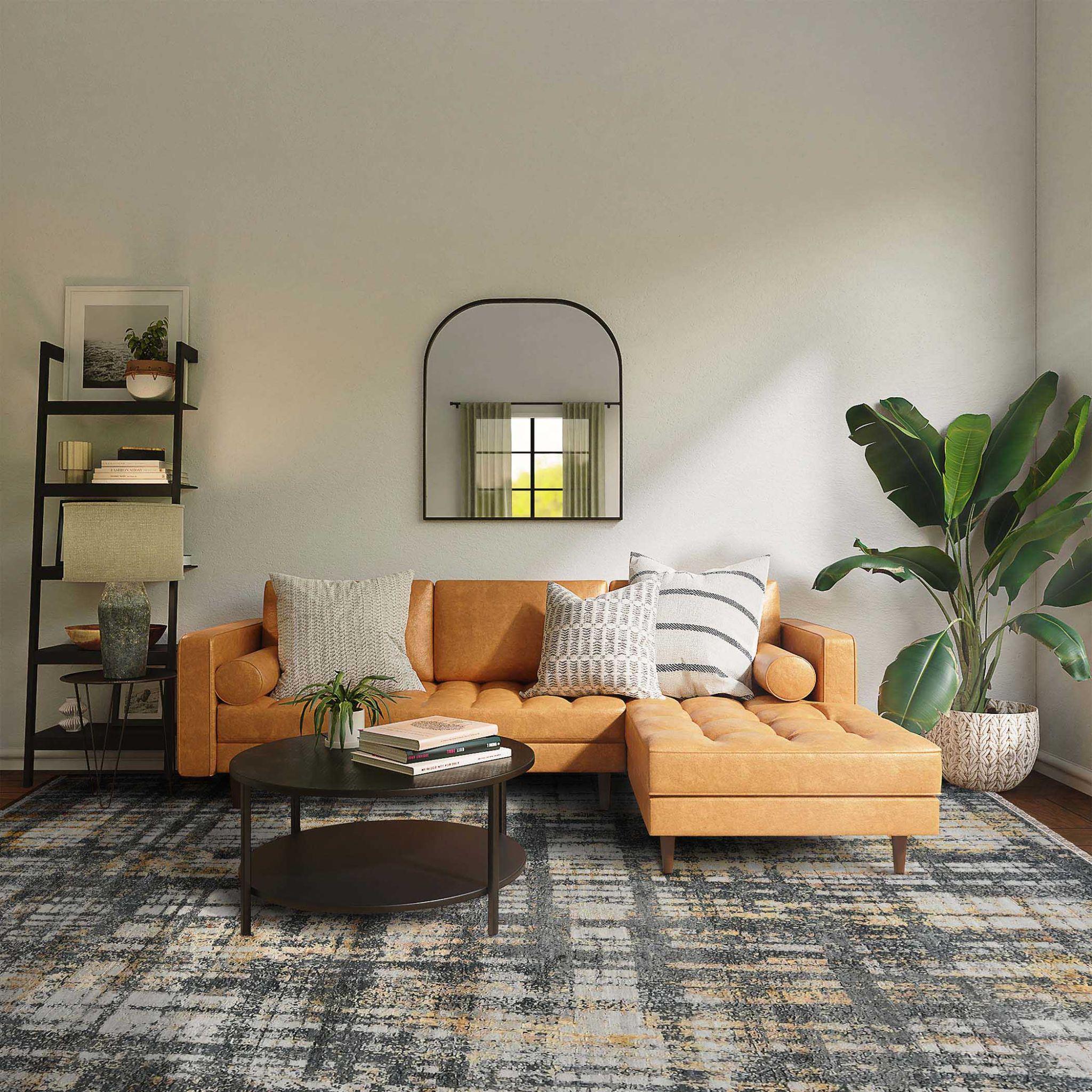
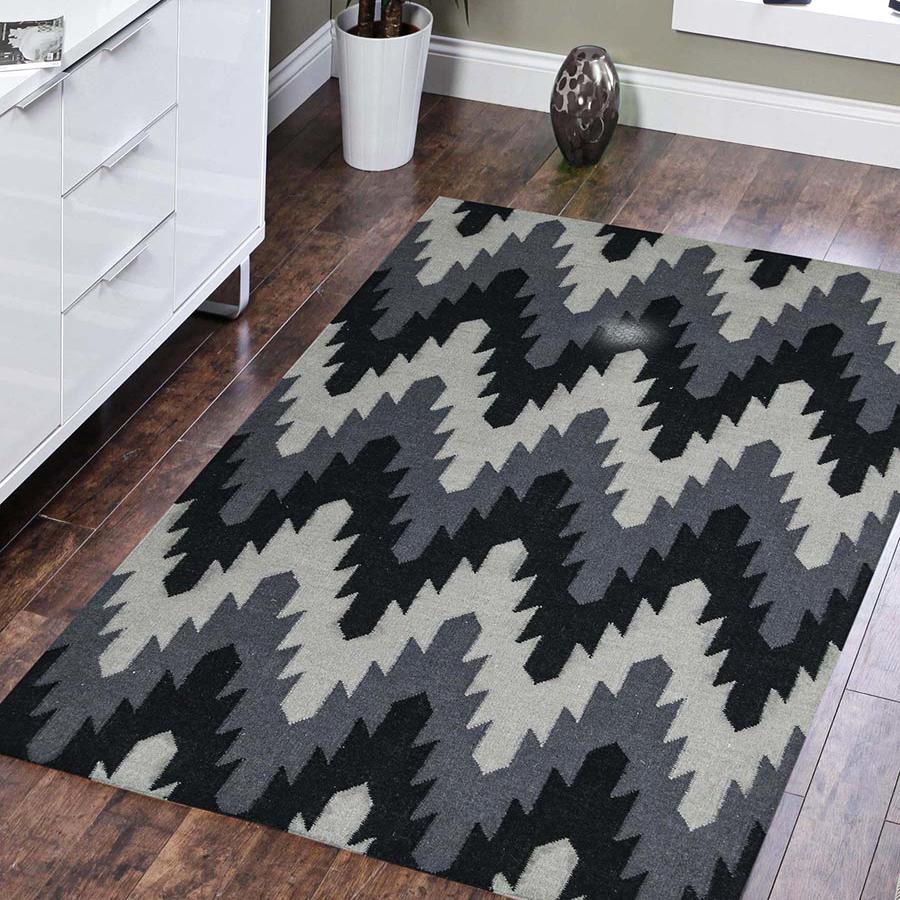
- Charcoal grey or soft black for quiet contrast
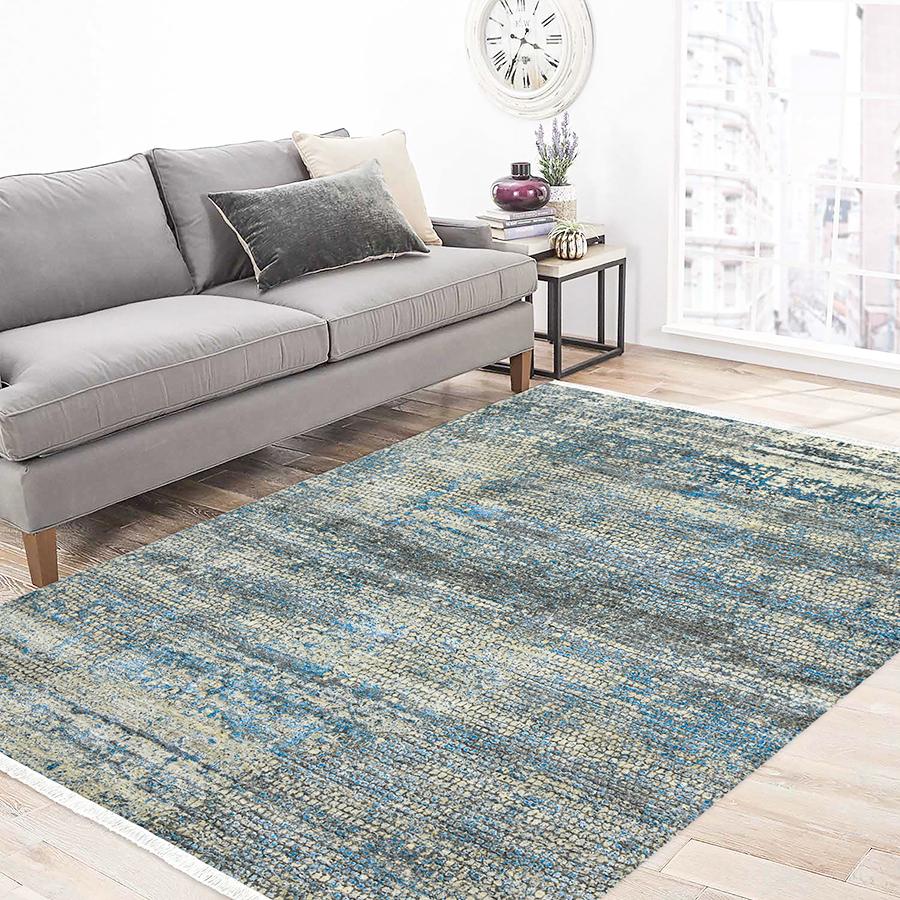
- Muted blue or teal to cool the room down a touch
- Cream or ivory if the room already feels busy
Stay away from rust or orange rugs here. Two warm tones stacked together can make a room feel flat and a bit heavy, instead of rich.
Best Rug Colours for Walnut Furniture
Walnut runs deeper and more reddish-brown, almost chocolate in some pieces. It is a darker, heavier wood, so the rug's job is often to lighten things up rather than add more depth.
Good choices include:
- Ivory or oatmeal for an airy feel
- Soft olive or sage green, which reads as calm and natural
- Mustard or ochre in small doses for a classic mid century modern rug look
Avoid very dark or cool grey rugs next to walnut. That combination can make a room feel closed in, especially if the space does not get much natural light.
Neutral Rugs for Mixed Wood Interiors
Many homes do not use just one wood. A walnut coffee table might sit near a teak sideboard, and that is completely fine. In this case, a neutral rug is the safest bridge.
Look for:
- Undyed wool tones like oatmeal, sand, or soft grey
- Low-contrast geometric rug pattern instead of bold, graphic ones
- Flatweave rugs, which tend to read as calmer than thick pile rugs
A neutral rug lets both wood tones stand out on their own, instead of competing for attention.
Mid Century Rugs: Pattern, Scale & Geometric Balance
As a rule, area rugs from mid century style tend to emphasize shape rather than detail. We are talking about diamonds, chevrons, stripes, and abstract spots. Not tight florals or curlies bordering a floral design.
You can follow this simple rule in nearly any room. Check your furniture first and then select your rug.
- Suppose your teak or walnut pieces are plain and simple; a bolder patterned rug adds character
- If your furniture already has strong lines or bold upholstery, go quieter with the rug
- And if you are not sure, a medium-scale geometric pattern is the safest middle ground
Just as important as the pattern itself is scale. A small, busy print can appear frantic under a large sofa, and an enormous bold print will overwhelm the space of a smaller room. As a general rule, the bigger the room, the bigger the pattern.
Mid-Century Rugs vs. Modern Rugs: What's the Difference?
These two different concepts are widely used as if they mean the same thing, but they do not. Modern rugs nowadays lend themselves to anything fresh, contemporary, and new-age. This can be something like abstract art rugs or bold black and white designs, or perhaps very minimal solid rugs.
Mid-century rugs, conversely, are a take on a few decades of history. They often explore warm colors, softer geometric shapes, and appear a little worn in texture even if the rug is out of the shop.
Here is a quick way to tell them apart:
- Modern rugs: cooler colors, clean lines, almost minimal or graphic
- Mid-century rugs: warmer colors, more organic shapes(weights), natural fiber texture
Mid-century rugs will almost always seem at home if your house is full of teak and walnut furniture. If you use a very straight modern rug, it may not go well with the inviting feel of your wood.
Styling a Mid-Century Modern Area Rug Room by Room
A mid-century modern area rug does not work the same way in every room. What looks right under a dining table can look completely wrong under a bed. Here is how to think about each space.
Living Room: Framing Low-Profile Seating
Mid-century sofas and chairs are low and often on thin, tapered legs. The role of the rug here is to create a visual binding element in the seating area.
General rule of thumb: The front legs of your couch and chairs should at least be on the rug. That helps keep the layout anchored, rather than having it look like the furniture is about to float off to one side. If you have a short, square-profiled coffee table in the centre with, say, teak or walnut surrounded by relatively dark walls, then let the rug run a little beyond it on all sides.
Dining Room: Rug Selection Based on Table Size
There is extra space to consider a dining rug, not just the area of the table but what about the chairs? When someone slides a chair back to seat themselves, the rear legs should remain on the rug.
As a basic rule of thumb, allow~60-75 cm of rug space for each side of the table. If your walnut dining table measures 180 cm, you should therefore go for a carpet of about 240 to 270 cm. For instance, a round table would match pretty well with a round rug, and a rectangular table almost always looks better with a rectangular rug.
Bedroom: Anchoring the Bed and Furniture
In the bedroom, the rug should feel soft underfoot the moment you step out of bed. With a walnut or teak bed frame, a rug that runs at least 45 to 60 cm past each side of the bed works well.
You have two solid options here. A large bedroom rug can sit under most of the bed and extend into the walking space, or two smaller runners can sit on either side. Either way, keep it low pile if your bed frame has thin, exposed legs, so the frame does not get visually swallowed by the rug.
Home Office: Balancing Work and Accent Furniture
A home office with a teak desk usually needs a rug that can handle a rolling chair without bunching up. Flatweave or low-pile rugs work best here for that reason.
Make sure the rug is large enough that the chair stays on it even when rolled back fully. This protects your floor and keeps the chair from catching on the rug's edge. A smaller geometric rug can also work well tucked under an accent chair in the corner of the room, away from the desk itself.
Mid-Century Modern Rug Sizes: How to Choose the Right Dimensions
Size is where most rug choices go wrong, even more than color or pattern. A rug that is too small makes a whole room feel unfinished, no matter how nice the furniture is.
Here is a rough starting point by room:
- Living room: 240 x 300 cm or larger for most seating areas
- Dining room: table length plus 120 to 150 cm total, so chairs stay on the rug when pulled out
- Bedroom: at least 45 cm of rug showing on each side of the bed
- Home office: big enough for the chair to move freely without slipping off the edge
One more thing worth remembering. Mid-century furniture often has slim, tapered legs, and those legs look best when they are clearly visible on the rug, not lost under a thick pile. So along with size, pay attention to pile height too. Low pile almost always reads as more mid-century than a plush, high pile rug.
Can You Layer Area Rugs in a Mid-Century Modern Home?
Yes, and it works better than most people expect. Layering means placing a smaller rug on top of a larger one, and it is a simple way to add texture without changing the whole room.
A common combination is a large, neutral flatweave rug as the base, with a smaller vintage or patterned rug placed on top, usually under a coffee table or accent chair. This adds a bit of that collected, lived-in feel that suits mid century modern interior design so well.
A few tips if you want to try it:
- Keep the base rug simple, so the top layer stands out
- Choose two rugs with different textures, like a flatweave base with a slightly plush top layer
- Do not layer two bold patterns together; it usually looks cluttered rather than styled
Layering is optional, not required. A single well-chosen rug works perfectly fine on its own too.
Common Rug Mistakes in Mid Century Modern Interior Design
Even a beautiful rug can throw off a room if it does not fit with the rest of your mid century modern interior design. Here are the mistakes that come up again and again.
- Stacking two warm tones together, like a rust rug with reddish walnut furniture. It can make the room feel muddy instead of rich.
- Going too small. A rug that only fits under the coffee table looks like an afterthought.
- Picking a rug so thick it hides the tapered legs of your chairs or sofa, which are usually the whole point of the furniture.
- Choosing a cold, icy grey rug against warm teak, which can make the room feel a bit sterile.
- Mixing an overly ornate, formal rug with clean, simple furniture. The two styles pull in different directions.
If you keep coming back to one of these points while shopping, it is usually a sign to slow down and reconsider that rug.
Essential Care & Maintenance To Protect Your Rug With Wood Floors
A good rug and a well-loved piece of teak or walnut furniture both deserve a bit of care. A few simple habits go a long way.
- Always place a rug pad under any rug on top of hardwood floors. It prevents slippage and also protects the wood finish below from scratches.
- For areas that get a lot of sunlight, turn your carpet every so many months, and in time the whole rug fades kind of like an old piece of clothing or a bed sheet rather than just one spot.
- Regularly vacuum on a low-power setting to prevent pulling from the weave or fibers of rugs that are wool or have fringe.
- However, use blotting immediately and do not rub; rubbing pushes the stain deeper into the fibres.
- Lifting things off the rug can avoid issues near wooden legs, instead of dragging them across the rug every now and then.
Wool rugs are fairly strong anyway owing to their hand-woven nature, but some basic maintenance keeps the rug and your wooden furniture in a state of top condition for many years.
Should You Use Hand-Woven Rugs in a Mid-Century Modern Home?
Sure, but really, they are one of the best fits for this style. Mid-century modern design has long favored modest, well-crafted materials over anything shiny and mass-produced. And a handwoven rug aligns perfectly with that concept.
All of our pieces are made by hand; therefore, each rug has natural variances, and this is not a defect. It's what adds personality to the rug, much like solid teak or walnut furniture shows real wood grain as opposed to a printed pattern. Natural craft works in pairs also and has a place in a room.
At Saraswati Rugs, every rug is handwoven by skilled artisans using traditional techniques and natural fibers for wool rugs, cotton, and jute rugs. This matches the same values that shaped mid-century design in the first place, which is quality that is built to last, not something meant to be replaced in a year or two.
Buy Mid-Century Modern Rugs for Every Room
Now that you know your wood tone, room, and approximate size, choosing gets a lot easier. This is a simple starting point based on what this guide has covered.
- The ideal solution to warm up a walnut living room: opt for ivory or sage geometric rugs
- Add contrast to the other teak furniture you have; consider either charcoal or subdued teal pencil designs.
- Mixed timber spaces: ground with a low-contrast flatweave in neutrals
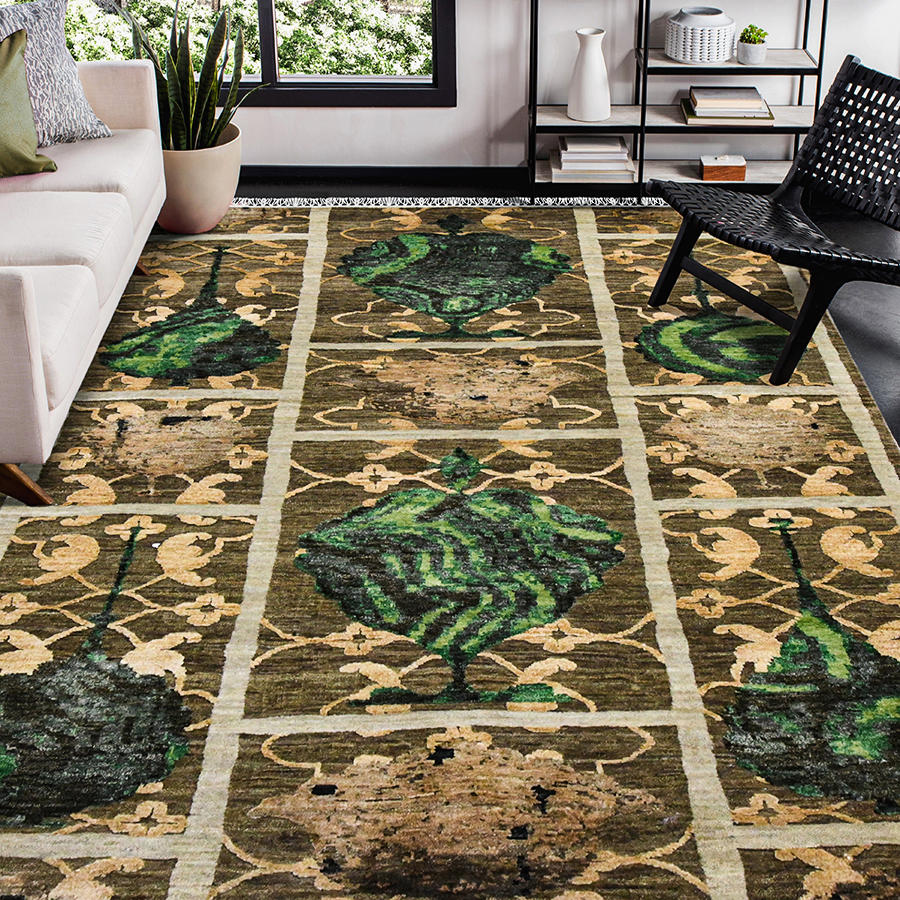
Browse our collection of mid century modern rugs and area rugs, each one handwoven to bring warmth, texture, and character to your space.
Key Takeaways: Choosing a Rug for Your Mid-Century Modern Home
A good mid-century modern rug should feel as if it belongs, not something that feels the need to try. Remember these to keep in mind when you go shopping:
- Coordinate your rug with the tone of your wood. Teak is into supersaturation; Walnut likes lighter;
- Select a pattern and scale according to how loud your furniture already is.
- Size up rather than down. The biggest mistake is picking a rug that is too small.
- It will be important to keep this sufficient pile low enough for you to notice tapered furniture legs.
- Handwoven, natural rugs provide the authentic craftsmanship that mid century modern home decor was built on.
Begin with your most used space, select a single rug for it, and work outwards from there. That is basically all you need for this style.
FAQs About Mid-Century Modern Rugs
Q1. What makes a rug mid-century modern?
Ans: A mid-century modern rug usually has geometric or abstract patterns, warm earthy colors, and natural materials. It also sits low to the floor, which suits clean-lined furniture.
Q2. What rug materials work best for a mid-century modern home?
Ans: Wool, jute, and cotton are all good picks. Low-pile and flatweave rugs work especially well since they keep slim, tapered furniture legs visible.
Q3. What rug colors work best with teak furniture?
Ans: Charcoal, soft black, muted blue, teal, cream, and ivory all pair nicely with teak's warm, honey-gold tone.
Q4. What rug colors work best with walnut furniture?
Ans: Ivory, oatmeal, soft olive, sage, mustard, and ochre work well here. Lighter shades help balance walnut's deeper tone.
Q5. Can I mix teak and walnut furniture in the same room?
Ans: Yes, plenty of homes do this. A neutral, low-contrast rug in oatmeal, sand, or soft grey can tie both wood tones together.
Q6. What rug size is best for a mid-century modern living room?
Ans: A good starting point is 240 x 300 cm or larger. Aim for a size that anchors the whole seating area, not just the space under the coffee table.
Q7. Should I choose a low-pile rug for mid-century furniture?
Ans: Yes, low-pile rugs are a smart choice. They keep slim, tapered furniture legs visible instead of hiding them. Flatweave rugs work well too.
Q8. What rug shape works best with mid-century modern furniture?
Ans:Let the furniture guide the shape. A rectangular table usually looks better with a rectangular rug, and a round table pairs naturally with a round one.
Q9. Can vintage rugs work with mid-century modern furniture?
Ans: Yes. Vintage or vintage-style rugs add nice texture and character. Just keep the colors muted or the pattern simple if your furniture already has strong lines.
Q10. Can I layer rugs in a mid-century modern room?
Ans: Yes. A large, neutral flatweave as the base with a smaller vintage or patterned rug on top works well. Just avoid pairing two bold patterns together.
Q11. Does a jute rug work with teak furniture?
Ans: Yes. Jute has a light, natural tone that complements teak's warmth and adds a nice bit of texture to the room.